


General Auto Speaker Installation
Can you connect car speakers directly to the radio?
Sep
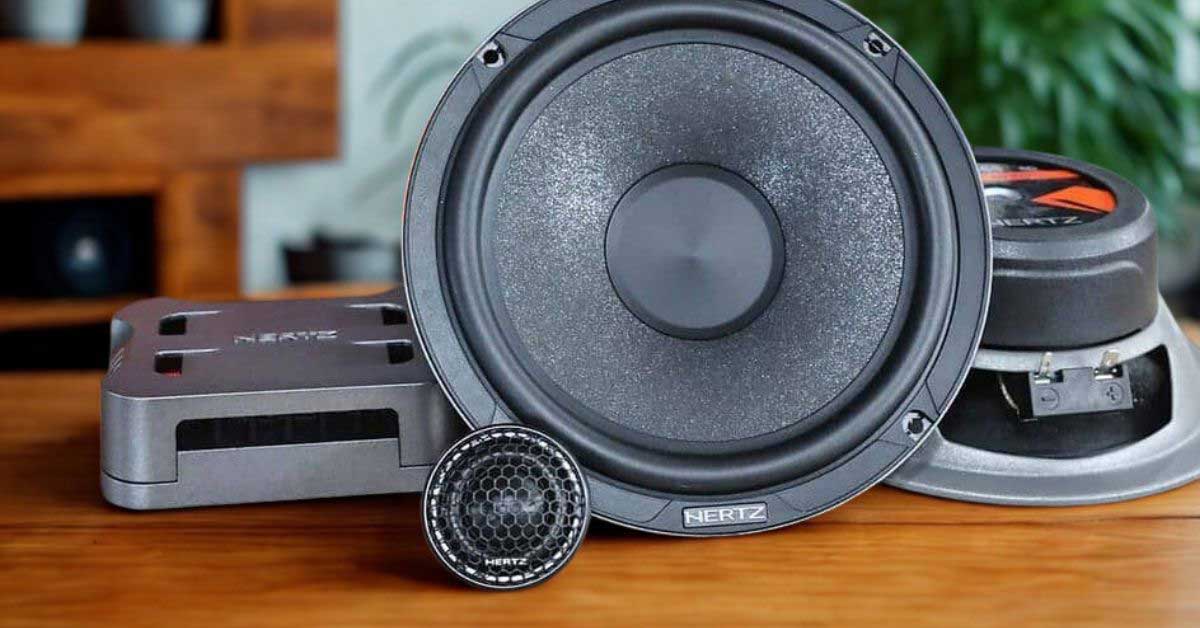
The short answer: Yes, that's possible. New speakers can be connected directly to the existing cables in the doors in most vehicles – as long as no premium sound system such as Bose or Harman is installed. Standard radios and navigation systems work with them. 4-ohm speakers, Just like aftermarket loudspeakers from the retail trade. Therefore, an exchange is usually possible without any problems.
? More background information and a step-by-step guide can be found in the Hub article: Can I retrofit car speakers myself?
Knowledge box: What is speaker impedance?
RMS vs. Maximum power – the limits of car audio systems
Almost every radio station says „4 × 50 watts“. In reality, it looks different:
- True lasting performanceRMS) is at 12–20 watts per channel.
- More is not possible with 12 volts of power output without an external power amplifier.
- The high wattages are Maximum values, which are reached only in short peaks.
Conclusion: New speakers bring more clarity and often better bass – but no miracles in terms of volume.
Efficiency: Why it is more important than watt numbers
The Efficiency Indicates how efficiently a loudspeaker converts electrical energy into sound.
- High efficiency (e.g., 90 dB/1W/1m): The speaker plays very loudly even with little power.
- Low efficiency (e.g., 84 dB/1W/1m): requires significantly more power to achieve the same volume.
Since car radios only provide little RMS power, efficiency plays a crucial role: Speakers with high efficiency harmonize much better with pure radio operation.
Membrane area: Size matters for bass
Another factor for the sound is the Membrane area.
- 130 mm speakers due to their design, they cannot produce deep bass – they simply move too little air.
- 165 mm or 200 mm woofer bring more volume and bass – but: They don’t just fit into the vehicle’s mounting locations. Here would be Modifications or adapter solutions necessary.
Therefore, anyone who wants true bass is often accompanied by a Subwoofers are better advised. Bass bins in the trunk or compact Subwoofer under seat They are much easier to integrate and provide significantly more depth without requiring extensive modifications to the door panel. Low-frequency sound requires larger speakers or a subwoofer, which is not an option in the long term.
Comparison: Autoradio vs. Radio + Amp
| ? Setup | ? Power (RMS) | High efficiency (90 dB) | ? Efficiency low (84 dB) |
|---|---|---|---|
| Audio system alone | 12–20 W/channel | Normal volume, suitable for everyday use | It works quietly; the sound remains flat |
| Radio + Power amplifier | 50–100 W/channel | Very loud, clear dynamics | Significantly better, but inefficient |
Conclusion
Yes – you can connect speakers directly to the radio. The sound quality is noticeably better than with the standard speakers, as long as the impedance and installation match. However, the low power of the radios sets limits.
What is crucial for the result: Efficiency and membrane area of the loudspeakers. A good 165 mm speaker with high efficiency plays convincingly on the radio – a weak 130 mm speaker with low efficiency remains flat, no matter how much wattage is stated on the packaging.
Anyone who wants more can upgrade at any time: door insulation, power amplifier, subwoofer. Replacing the speakers is the first step towards a better sound experience.
❓ FAQ – Frequently Asked Questions

 German
 English